Quick answer
What to know first
To get rid of roaches, identify the active rooms, remove food and water competition, place bait near hidden harborages, and monitor until new droppings and sightings stop.
Start here
- Kitchen and bathroom cabinets, appliance seams, sink bases, drains, and warm motors
- Droppings, egg cases, nymphs, shed skins, odor, or nighttime sightings
- Leaks, grease, pet food, trash, cardboard, and shared-wall gaps
Before you act
Getting rid of roaches depends on species, hiding location, moisture, and food access. A strong plan starts by finding the active room and evidence, then combines sanitation, exclusion, bait, monitoring, and follow-up.
- Kitchen and bathroom cabinets, appliance seams, sink bases, drains, and warm motors
- Droppings, egg cases, nymphs, shed skins, odor, or nighttime sightings
- Leaks, grease, pet food, trash, cardboard, and shared-wall gaps
Action plan
5-Step Treatment Plan
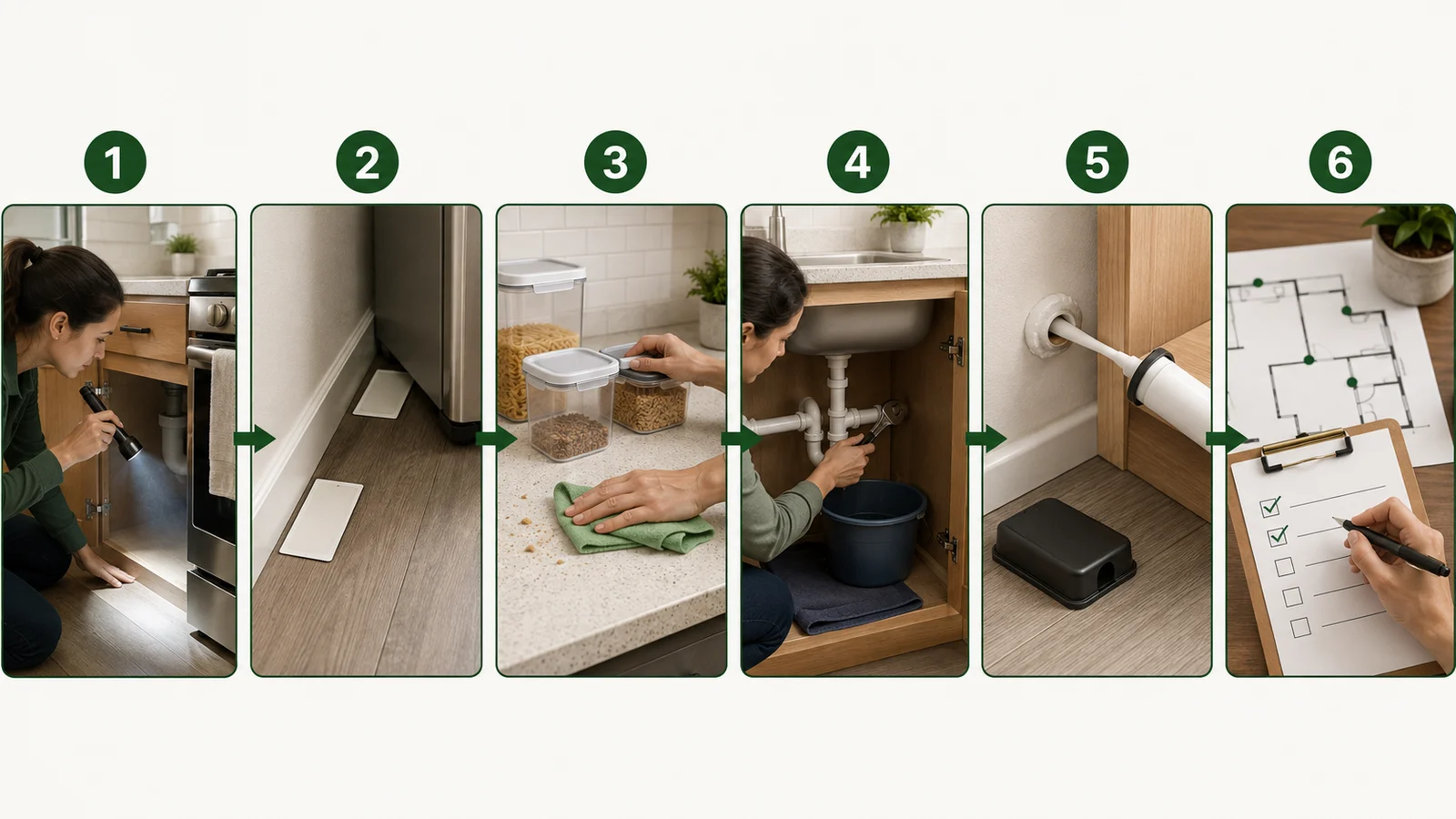
- 1
Place sticky monitors in cabinets, behind appliances, under sinks, and along wall edges.
Place sticky monitors in cabinets, behind appliances, under sinks, and along wall edges.
- 2
Clean grease, crumbs, trash areas, pet food, and food residue before baiting.
Clean grease, crumbs, trash areas, pet food, and food residue before baiting.
- 3
Apply roach gel bait in small placements near active cracks and appliance seams.
Apply roach gel bait in small placements near active cracks and appliance seams.
- 4
Fix leaks, dry sink bases, and remove standing water overnight
Fix leaks, dry sink bases, and remove standing water overnight.
- 5
Recheck monitors weekly and refresh bait only where activity remains
Recheck monitors weekly and refresh bait only where activity remains.
What not to do
Spraying over bait or forcing roaches deeper into walls
Spraying over bait or forcing roaches deeper into walls
Cleaning visible counters while ignoring appliance and cabinet edges
Cleaning visible counters while ignoring appliance and cabinet edges
Stopping treatment after the first few days without monitoring
Stopping treatment after the first few days without monitoring
How to judge progress
Recheck the same locations and evidence types instead of judging the result from one quiet interval.
- Track whether this clue persists, returns, or spreads: Roaches seen at night near kitchens, bathrooms, sinks, or appliances
- Track whether this clue persists, returns, or spreads: Pepper-like droppings in drawers, cabinets, or appliance seams
- Track whether this clue persists, returns, or spreads: Egg cases, shed skins, or small nymphs in protected cracks
- Track whether this clue persists, returns, or spreads: Musty odor or repeated sightings after lights are turned on
Signs the treatment is not working
- Fresh evidence continues to appear in the same inspected locations.
- Activity spreads to new rooms, materials, or monitoring points.
- The suspected source remains active after the action plan has been followed and reassessed.
After treatment and reducing recurrence
- Store food and pet food in sealed containers.
- Clean under refrigerators, ovens, and dishwashers regularly.
- Seal gaps around pipes, cabinet backs, doors, and shared walls.
- Reduce cardboard storage in kitchens, pantries, and utility rooms.
- Inspect boxes, deliveries, and used appliances before bringing them inside.
When to call a professional
Call a professional when roaches appear during the day, nymphs are common, multiple rooms are active, or activity returns after bait and sanitation.
Safety notes
- Confirm the pest or evidence before applying a control product.
- Use pesticides only where the product label permits, and follow the full label.
- Do not mix products or improvise heat, electrical, or chemical treatments.
FAQ
What kills roaches permanently?
No product guarantees permanent control by itself. Long-term control usually requires bait near harborages, food and water reduction, sealing entry points, and monitoring.
Why do roaches come out after treatment?
Some activity can increase briefly as roaches move from hiding places. Continue monitoring and avoid spraying over bait placements.
Not sure the pest is correctly identified?
Upload a clear photo before choosing a treatment path.
Identify from photoExplore next
Continue with verified context
Related pest profiles
Related evidence
Related guides
Reviewed guidance · Last reviewed August 2026
Based on Pest Or Not verified knowledge and authoritative pest-management references.
How we review content