Quick answer
What to know first
The most reliable German roach plan is gel bait near hidden harborages, sticky monitors to track hotspots, strict food and moisture control, and follow-up until nymphs and fresh droppings stop.
Start here
- Cabinet hinges, drawer tracks, refrigerator motor areas, dishwashers, and under sinks
- Small tan roaches with two dark stripes behind the head
- Nymphs, egg cases, pepper-like droppings, and nighttime kitchen activity
Before you act
German roaches reproduce quickly and stay close to food, water, warmth, and tight cracks. They are common in kitchens, bathrooms, apartments, and appliance areas, so control needs repeated monitoring rather than one-time spraying.
- Cabinet hinges, drawer tracks, refrigerator motor areas, dishwashers, and under sinks
- Small tan roaches with two dark stripes behind the head
- Nymphs, egg cases, pepper-like droppings, and nighttime kitchen activity
Action plan
5-Step Treatment Plan
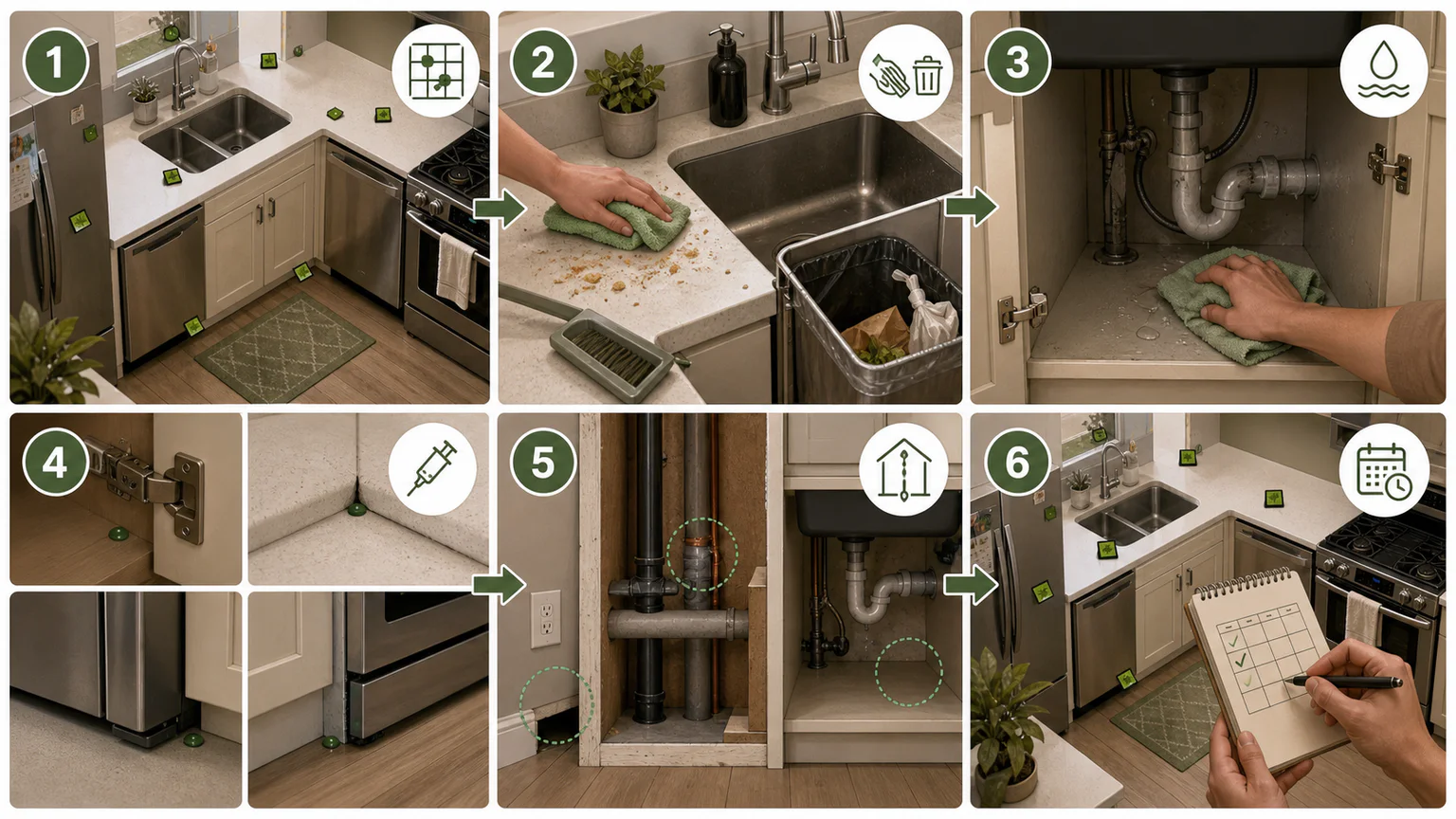
- 1
Map activity with sticky monitors before placing products
Map activity with sticky monitors before placing products.
- 2
Clean food residue, grease, crumbs, and trash areas every night
Clean food residue, grease, crumbs, and trash areas every night.
- 3
Apply pea-sized gel bait placements close to active cracks, hinges, and appliance seams.
Apply pea-sized gel bait placements close to active cracks, hinges, and appliance seams.
- 4
Fix leaks and dry sink bases so bait is more attractive than water sources.
Fix leaks and dry sink bases so bait is more attractive than water sources.
- 5
Check monitors weekly and continue until no nymphs or fresh droppings appear.
Check monitors weekly and continue until no nymphs or fresh droppings appear.
What not to do
Using repellent sprays where bait is placed
Using repellent sprays where bait is placed
Leaving crumbs, grease, pet food, or water available overnight
Leaving crumbs, grease, pet food, or water available overnight
Ignoring neighboring units or shared-wall gaps in apartments
Ignoring neighboring units or shared-wall gaps in apartments
How to judge progress
Recheck the same locations and evidence types instead of judging the result from one quiet interval.
- Track whether this clue persists, returns, or spreads: Small roaches in kitchens or bathrooms after dark
- Track whether this clue persists, returns, or spreads: Two dark stripes behind the head on adults
- Track whether this clue persists, returns, or spreads: Nymphs or egg cases near warm appliance motors
- Track whether this clue persists, returns, or spreads: Droppings in cabinet corners, drawer tracks, or sink bases
Signs the treatment is not working
- Fresh evidence continues to appear in the same inspected locations.
- Activity spreads to new rooms, materials, or monitoring points.
- The suspected source remains active after the action plan has been followed and reassessed.
After treatment and reducing recurrence
- Keep kitchen surfaces dry and food sealed overnight.
- Vacuum appliance edges, cabinet corners, and floor-wall seams.
- Seal plumbing gaps after activity declines.
- Avoid storing excess cardboard near kitchens and pantries.
- Coordinate with property management if activity may come from neighboring units.
When to call a professional
Call a professional for apartment spread, roaches seen during the day, repeated nymphs, or activity inside appliances and wall voids.
Safety notes
- Confirm the pest or evidence before applying a control product.
- Use pesticides only where the product label permits, and follow the full label.
- Do not mix products or improvise heat, electrical, or chemical treatments.
FAQ
How fast can German roaches multiply?
They can build quickly because females carry egg cases and nymphs hide in tight protected areas. Early monitoring and repeated follow-up are important.
Is gel bait better than spray for German roaches?
Indoor German roach control usually works better with bait and monitoring. Repellent sprays can scatter roaches and reduce bait performance.
Not sure the pest is correctly identified?
Upload a clear photo before choosing a treatment path.
Identify from photoExplore next
Continue with verified context
Related pest profiles
Related evidence
Related guides
Reviewed guidance · Last reviewed August 2026
Based on Pest Or Not verified knowledge and authoritative pest-management references.
How we review content