Quick answer
What to know first
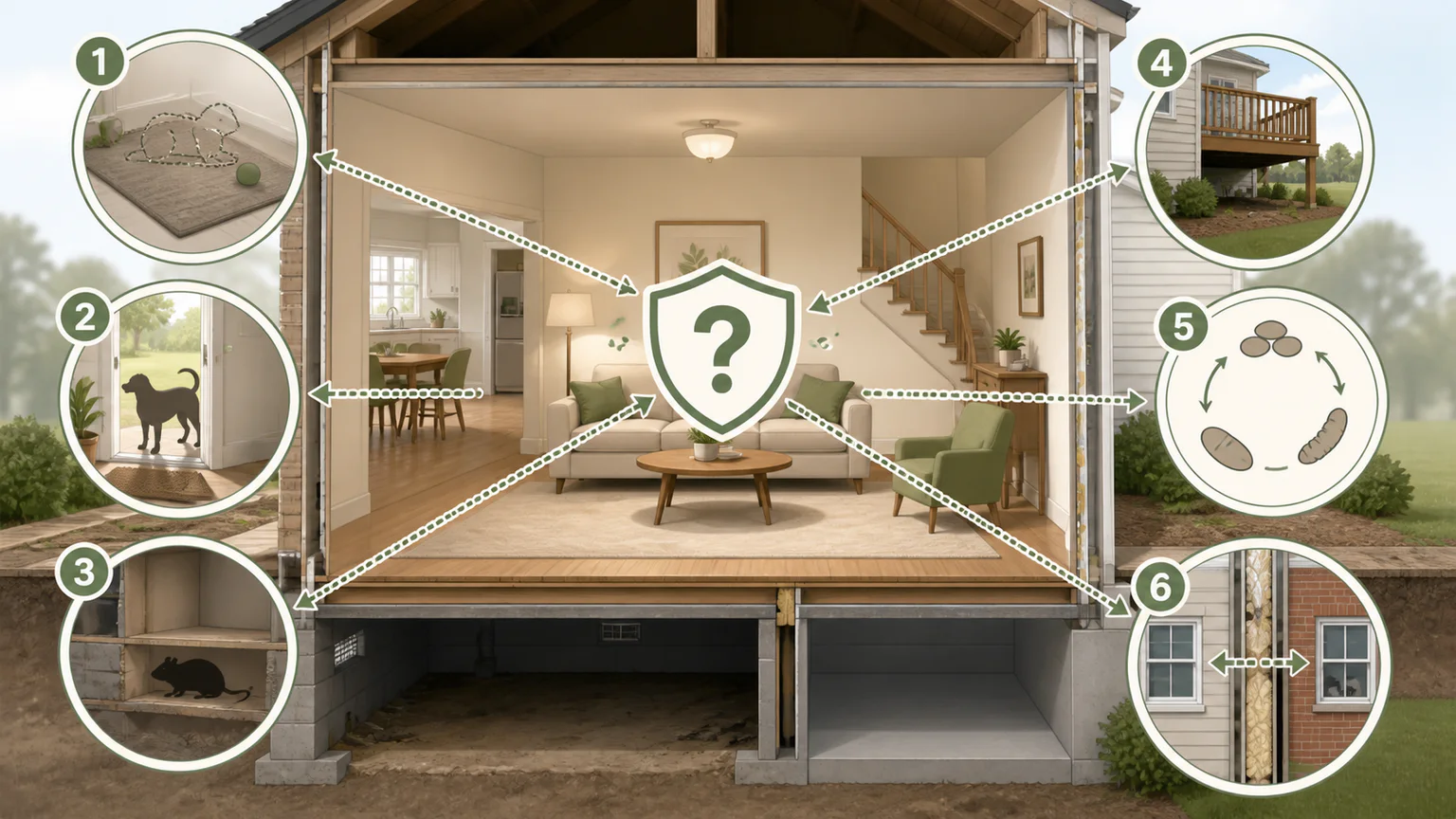
No current pet does not rule out fleas; investigate former pet resting areas and hidden rodent or wildlife hosts.
Start here
- Recent pets, visiting animals, used rugs or furniture, and wildlife access
- Jumping insects or flea dirt around floor edges and resting areas
What this evidence may mean
Fleas can emerge after a previous pet leaves, arrive on visiting animals or people, or develop where rodents or wildlife nest. Adults may bite people while immature stages remain in floor edges, upholstery, or sheltered nesting material.
Tiny dark insects that jump rather than fly
Tiny dark insects that jump rather than fly
Itchy lower-leg or ankle bites together with environmental evidence
Itchy lower-leg or ankle bites together with environmental evidence
Activity near rugs, upholstery, subfloors, or former pet bedding
Activity near rugs, upholstery, subfloors, or former pet bedding
Rodent or wildlife evidence in a crawl space, attic, chimney, or wall void
Rodent or wildlife evidence in a crawl space, attic, chimney, or wall void
Evidence strength
- A single isolated clue is weak when it has no clear scale, location, or repeated pattern.
- Evidence becomes stronger when several compatible signs cluster in the same inspected area.
- A recognizable specimen or repeated monitor finding is generally more informative than symptoms or a distant photograph alone.
Single clue vs corroborating evidence
Single weak clue
Document it, clean or mark the location when appropriate, and check whether it returns before drawing a conclusion.
Corroborating evidence
Look for multiple compatible signs, a repeated pattern, and a plausible source or harborage in the same area.
What it does not prove
- One clue does not automatically confirm an infestation or identify a species.
- An old or isolated sign does not prove activity is current.
- Skin marks or symptoms alone cannot identify the pest source.
Possible sources and context
- Recent pets, visiting animals, used rugs or furniture, and wildlife access
- Jumping insects or flea dirt around floor edges and resting areas
Lookalikes and non-pest explanations
Treating bites alone as proof of fleas
Treating bites alone as proof of fleas
Applying pesticide without finding the host or development area
Applying pesticide without finding the host or development area
Where to inspect next
- 1
Capture or photograph a jumping insect for confirmation
Capture or photograph a jumping insect for confirmation.
- 2
Vacuum floor edges, upholstery seams, and former animal resting areas repeatedly.
Vacuum floor edges, upholstery seams, and former animal resting areas repeatedly.
- 3
Wash suitable fabrics on a hot cycle and empty the vacuum outdoors
Wash suitable fabrics on a hot cycle and empty the vacuum outdoors.
- 4
Investigate and safely resolve rodent or wildlife hosts before exclusion.
Investigate and safely resolve rodent or wildlife hosts before exclusion.
What additional evidence would help
- A sharp close-up with scale.
- A wider photo showing the exact location.
- A dated record showing whether the clue returns.
- Tiny dark insects that jump rather than fly
- Itchy lower-leg or ankle bites together with environmental evidence
When the evidence becomes more concerning
Seek professional help when fleas persist after repeated cleaning, multiple rooms are affected, or a hidden animal host is suspected.
Recommended next step
- Use veterinarian-approved flea prevention for visiting or resident pets.
- Inspect used soft furnishings before bringing them indoors.
- Exclude rodents and wildlife after confirming that no animals are trapped inside.
FAQ
How long can fleas remain after a pet leaves?
Immature stages can remain protected in the environment and emerge later when vibration, warmth, and carbon dioxide signal a possible host.
Can mice bring fleas into a pet-free home?
Yes. Rodents and other mammals can support fleas, so unexplained flea activity should prompt a check for hidden animal access.
Not sure what this evidence is?
Upload the sign, specimen, and surrounding area for an evidence-focused result.
Identify the evidenceExplore next
Continue with verified context
Related pest profiles
Related evidence
Related guides
Reviewed guidance · Last reviewed August 2026
Based on Pest Or Not verified knowledge and authoritative pest-management references.
How we review content