Quick answer
What to know first
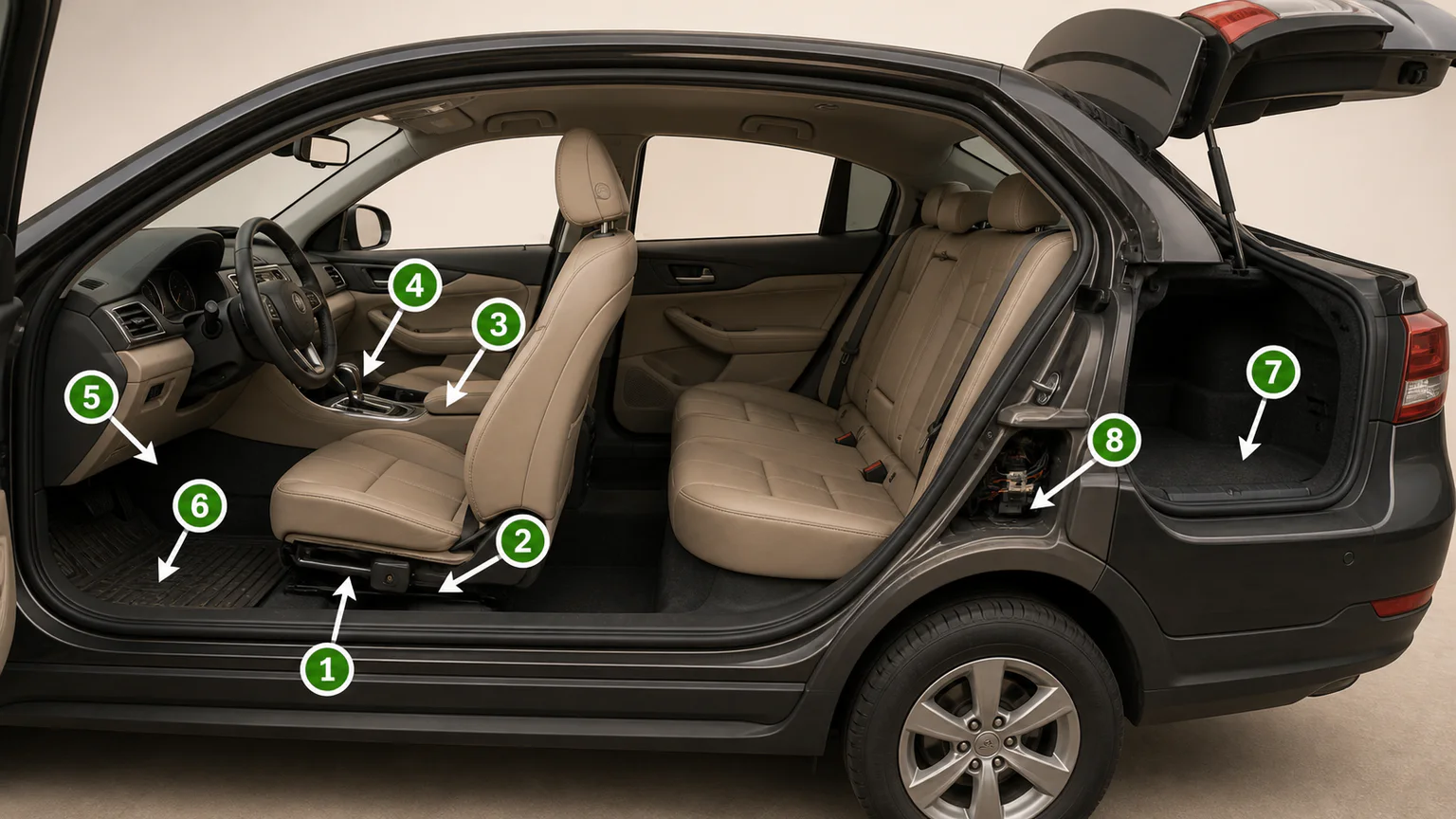
Roaches in cars usually persist because food residue, drink spills, clutter, or a transported egg case provides shelter and resources. Empty the vehicle, vacuum seams and compartments, monitor likely hiding places, and use only products whose label permits the intended location.
Start here
- Small roaches seen at night near consoles, seats, or the trunk
- Dark specks in cup holders, door pockets, or seat tracks
- Egg cases or shed skins beneath mats and stored items
Before you act
Roaches in cars usually persist because food residue, drink spills, clutter, or a transported egg case provides shelter and resources. Empty the vehicle, vacuum seams and compartments, monitor likely hiding places, and use only products whose label permits the intended location.
- Small roaches seen at night near consoles, seats, or the trunk
- Dark specks in cup holders, door pockets, or seat tracks
- Egg cases or shed skins beneath mats and stored items
Action plan
4-Step Treatment Plan
- 1
Remove all food, rubbish, cardboard, bags, and loose items from the vehicle.
Remove all food, rubbish, cardboard, bags, and loose items from the vehicle.
- 2
Vacuum seat seams, tracks, console gaps, door pockets, mats, and trunk edges.
Vacuum seat seams, tracks, console gaps, door pockets, mats, and trunk edges.
- 3
Place sticky monitors where they will not interfere with pedals or vehicle controls.
Place sticky monitors where they will not interfere with pedals or vehicle controls.
- 4
If needed, use a small amount of appropriately labeled bait in inaccessible cracks and recheck weekly.
If needed, use a small amount of appropriately labeled bait in inaccessible cracks and recheck weekly.
What not to do
Treating only insects that are visible during the day
Treating only insects that are visible during the day
Spraying over bait placements or leaving competing food available
Spraying over bait placements or leaving competing food available
Ignoring leaks, appliance voids, and neighboring-unit activity
Ignoring leaks, appliance voids, and neighboring-unit activity
How to judge progress
Recheck the same locations and evidence types instead of judging the result from one quiet interval.
- Track whether this clue persists, returns, or spreads: Small roaches seen at night near consoles, seats, or the trunk
- Track whether this clue persists, returns, or spreads: Dark specks in cup holders, door pockets, or seat tracks
- Track whether this clue persists, returns, or spreads: Egg cases or shed skins beneath mats and stored items
- Track whether this clue persists, returns, or spreads: Recent transport of infested boxes, bags, food, or appliances
Signs the treatment is not working
- Fresh evidence continues to appear in the same inspected locations.
- Activity spreads to new rooms, materials, or monitoring points.
- The suspected source remains active after the action plan has been followed and reassessed.
After treatment and reducing recurrence
- Do not leave food, cups, pet treats, or rubbish in the vehicle overnight.
- Clean spills promptly and keep stored items in sealed containers.
- Inspect boxes, bags, and used items before loading them.
- Check the parking area or garage if activity repeatedly returns.
When to call a professional
Use a qualified pest professional when nymphs and egg cases indicate breeding, the infestation affects wiring or ventilation areas, or careful cleaning and bait monitoring do not stop activity.
Safety notes
- Confirm the pest or evidence before applying a control product.
- Use pesticides only where the product label permits, and follow the full label.
- Do not mix products or improvise heat, electrical, or chemical treatments.
FAQ
Can I heat the car to kill roaches?
Uncontrolled heating can damage the vehicle and may not heat every hiding place evenly. Use cleaning, monitoring, and label-compliant treatment instead.
Can roaches damage a car?
Large infestations can contaminate surfaces and may enter electrical or ventilation voids. Early removal reduces that risk.
Not sure the pest is correctly identified?
Upload a clear photo before choosing a treatment path.
Identify from photoExplore next
Continue with verified context
Related pest profiles
Related evidence
Related guides
Reviewed guidance · Last reviewed August 2026
Based on Pest Or Not verified knowledge and authoritative pest-management references.
How we review content