Quick answer
What to know first
Squirrels enter attics through roofline gaps, vents, soffits, and chewed openings. Prevention should avoid trapping young animals inside and should use chew-resistant materials.
Start here
- Daytime scratching or running sounds in the attic
- Chewed fascia, vents, or roofline openings
- Droppings or nesting material in attic insulation
Highest-impact prevention steps
- Trim branches away from the roofline.
- Install chew-resistant vent covers.
- Repair soffit and fascia damage promptly.
- Inspect attics after storms and seasonal nesting periods.
Why activity becomes established
Squirrels enter attics through roofline gaps, vents, soffits, and chewed openings. Prevention should avoid trapping young animals inside and should use chew-resistant materials.
Entry points, attractants, and warning clues
Daytime scratching or running sounds in the attic
Daytime scratching or running sounds in the attic
Chewed fascia, vents, or roofline openings
Chewed fascia, vents, or roofline openings
Droppings or nesting material in attic insulation
Droppings or nesting material in attic insulation
Branches giving easy roof access
Branches giving easy roof access
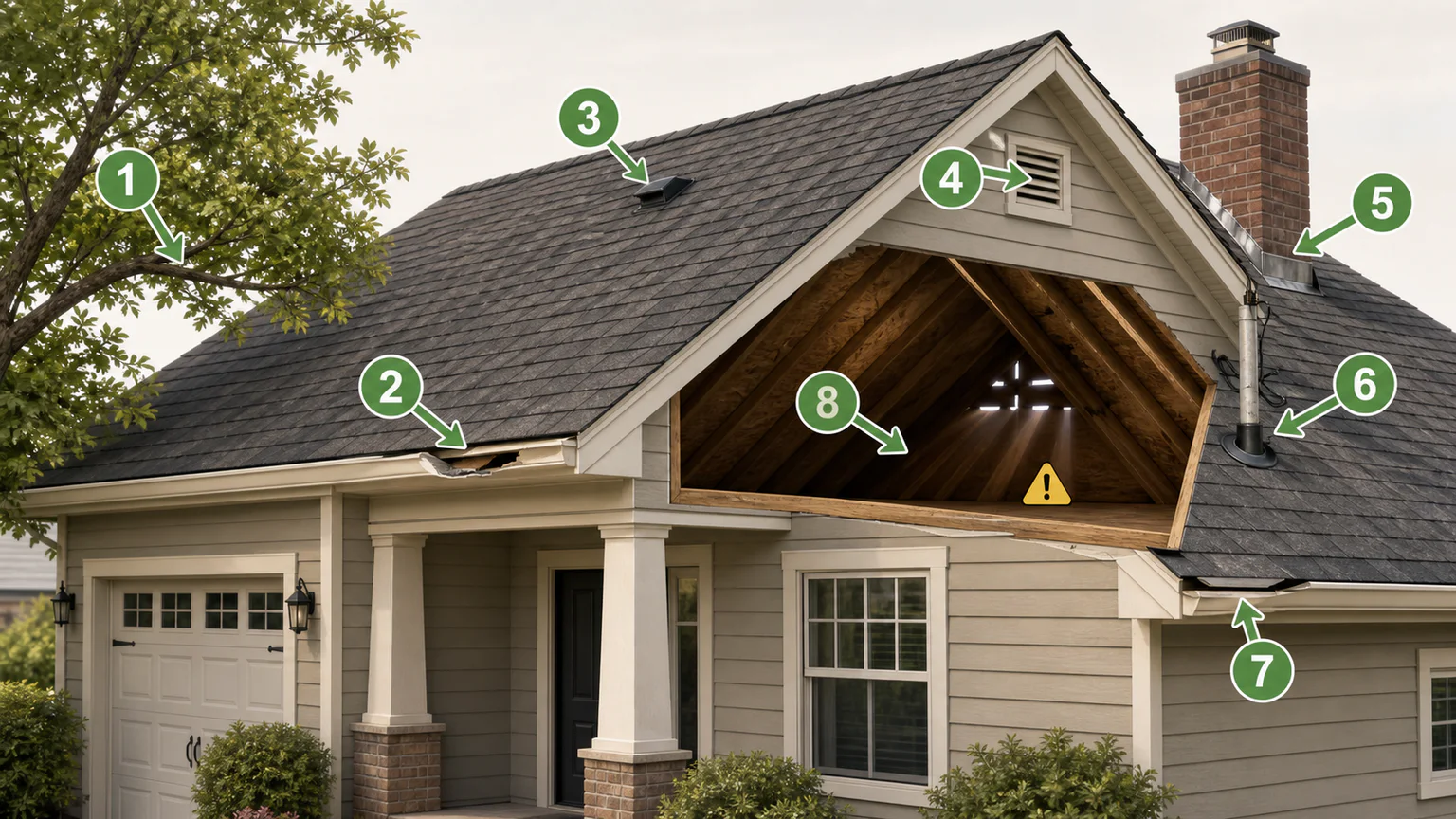
Area-by-area checklist
- 1
Identify all entry and exit points before sealing anything
Identify all entry and exit points before sealing anything.
- 2
Check whether young animals may be present before exclusion
Check whether young animals may be present before exclusion.
- 3
Use one-way exclusion only when appropriate and legal
Use one-way exclusion only when appropriate and legal.
- 4
Repair openings with metal flashing or heavy-gauge mesh
Repair openings with metal flashing or heavy-gauge mesh.
What people commonly miss
Sealing an opening before confirming that animals and young are outside
Sealing an opening before confirming that animals and young are outside
Handling wildlife, nests, or droppings without appropriate protection
Handling wildlife, nests, or droppings without appropriate protection
Using a method that conflicts with local wildlife rules
Using a method that conflicts with local wildlife rules
Monitoring routine
- Recheck on a consistent schedule: Daytime scratching or running sounds in the attic
- Recheck on a consistent schedule: Chewed fascia, vents, or roofline openings
- Recheck on a consistent schedule: Droppings or nesting material in attic insulation
Signs prevention is failing
- New, recurring, or spreading evidence: Daytime scratching or running sounds in the attic
- New, recurring, or spreading evidence: Chewed fascia, vents, or roofline openings
- New, recurring, or spreading evidence: Droppings or nesting material in attic insulation
- New, recurring, or spreading evidence: Branches giving easy roof access
What to do if activity appears
Call a wildlife professional when animals are inside, young may be present, or roofline access requires ladder work.
- Trim branches away from the roofline.
- Install chew-resistant vent covers.
- Repair soffit and fascia damage promptly.
FAQ
Can I seal the hole immediately?
Not if animals may be inside. Sealing too early can trap them and create bigger problems.
Do squirrels chew wires?
Yes. Attic activity should be checked for wiring and insulation damage.
Found signs despite prevention?
Upload the specimen or evidence before deciding what to do next.
Identify the evidenceExplore next
Continue with verified context
Related pest profiles
Related evidence
Related guides
Reviewed guidance · Last reviewed August 2026
Based on Pest Or Not verified knowledge and authoritative pest-management references.
How we review content